Resources for Autistic Oklahomans, Caregivers, Educators, & Providers
Suicide Prevention & Awareness
The Statistics
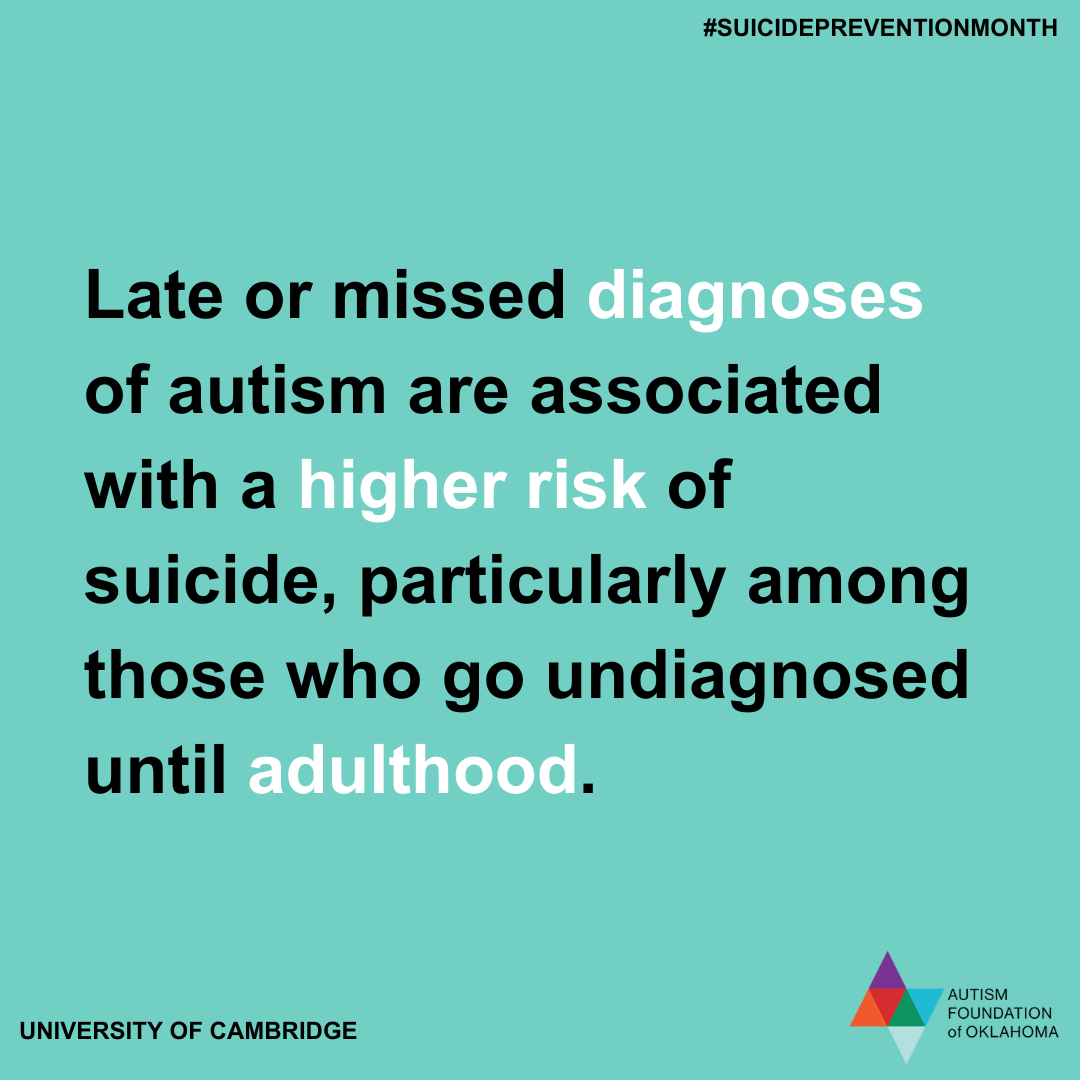
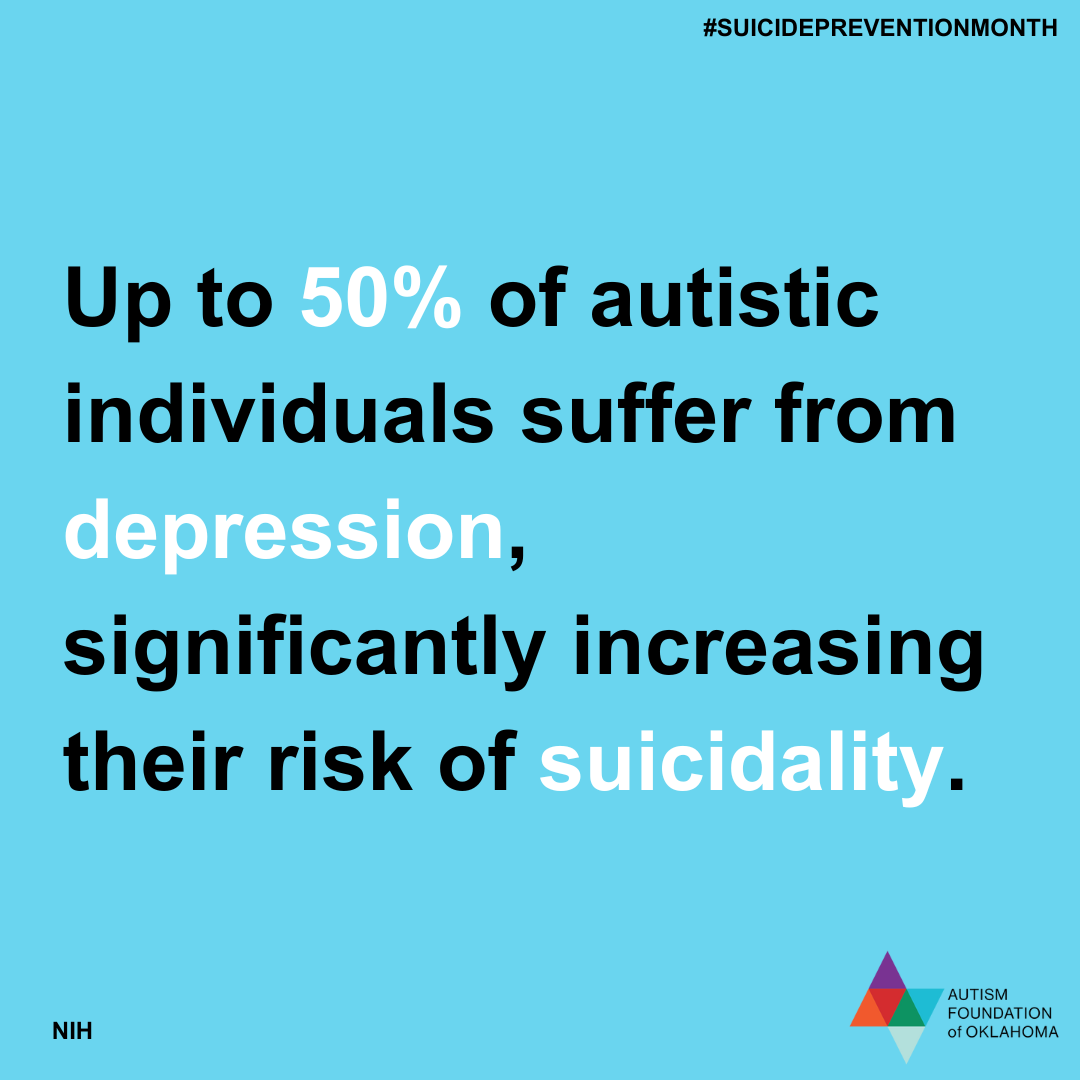
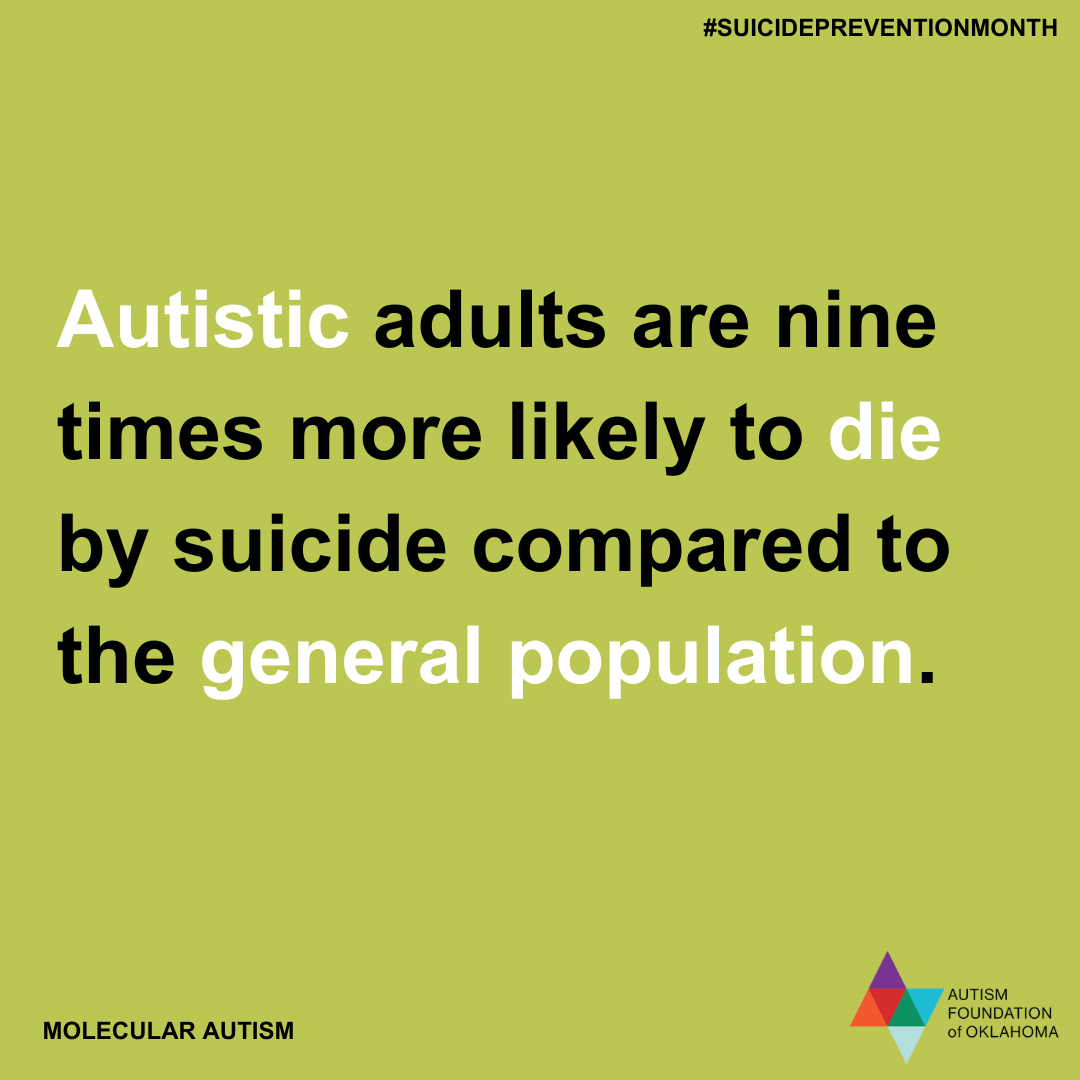
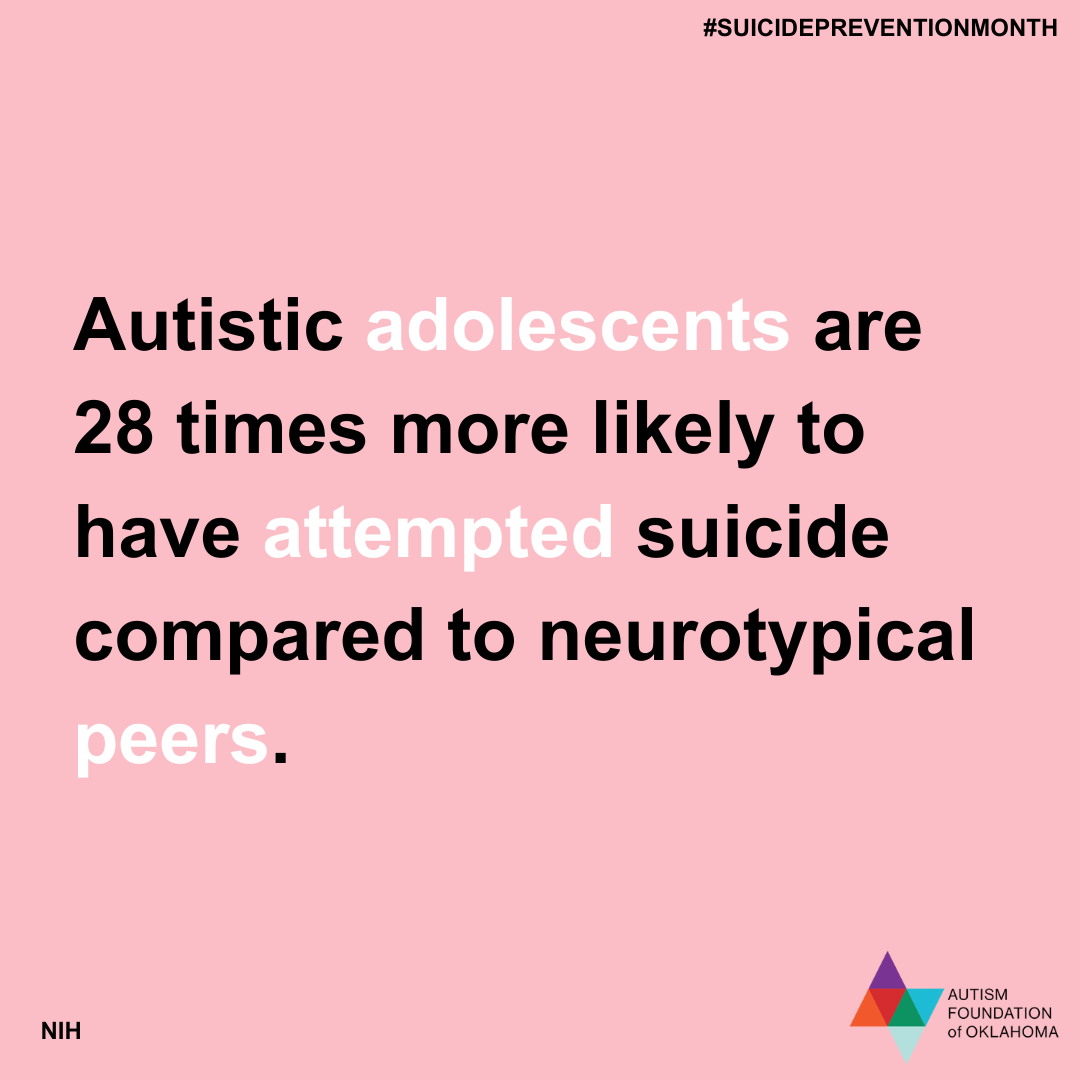
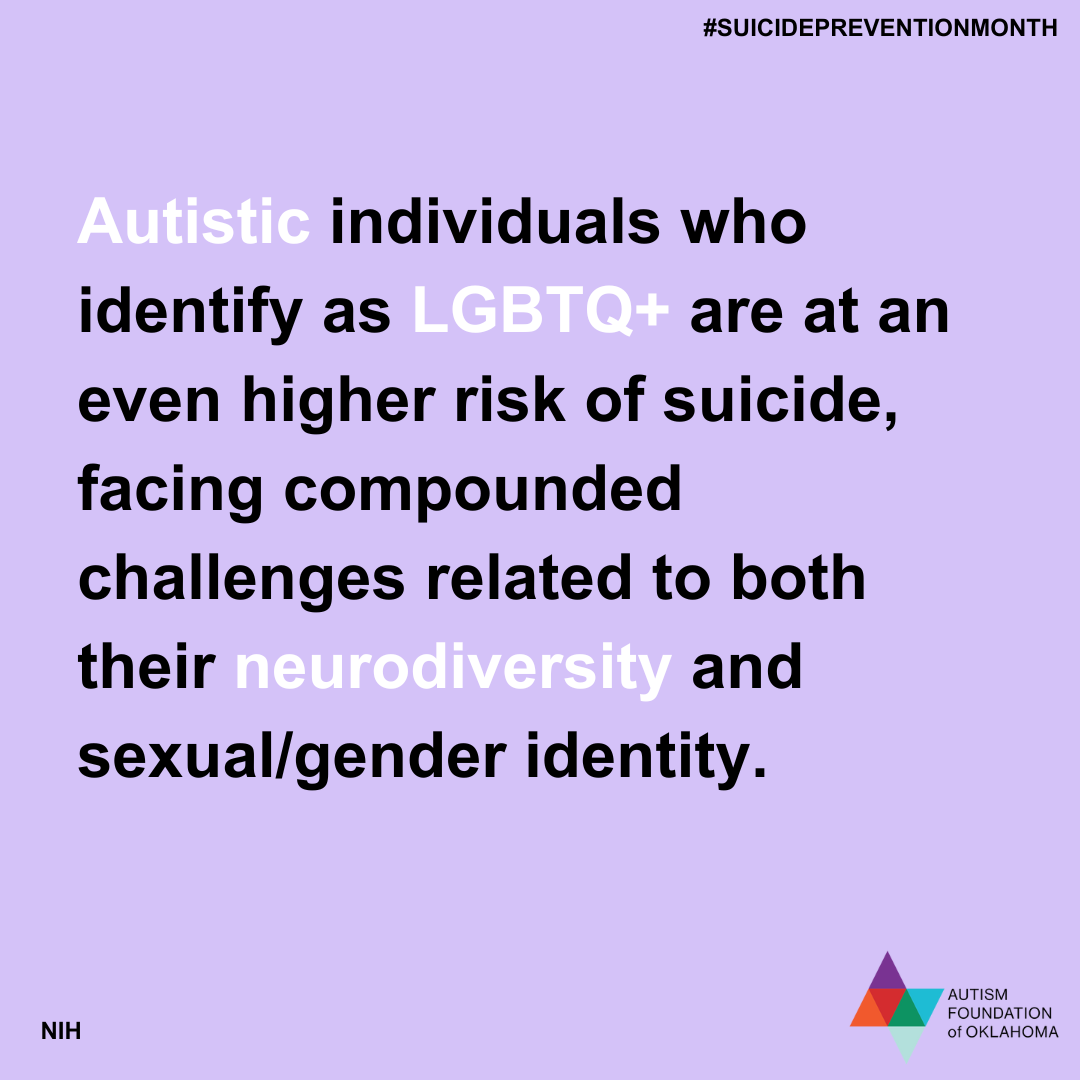
Autistic individuals can experience an increased risk of suicidal thoughts and behaviors. Research suggests that autistic people have a significantly higher risk of suicide than the general population. Recognizing changes in behavior, communication, and emotional well-being can help families, caregivers, educators, and professionals intervene early.
Suicide is the 2nd leading cause of death among autistic people.
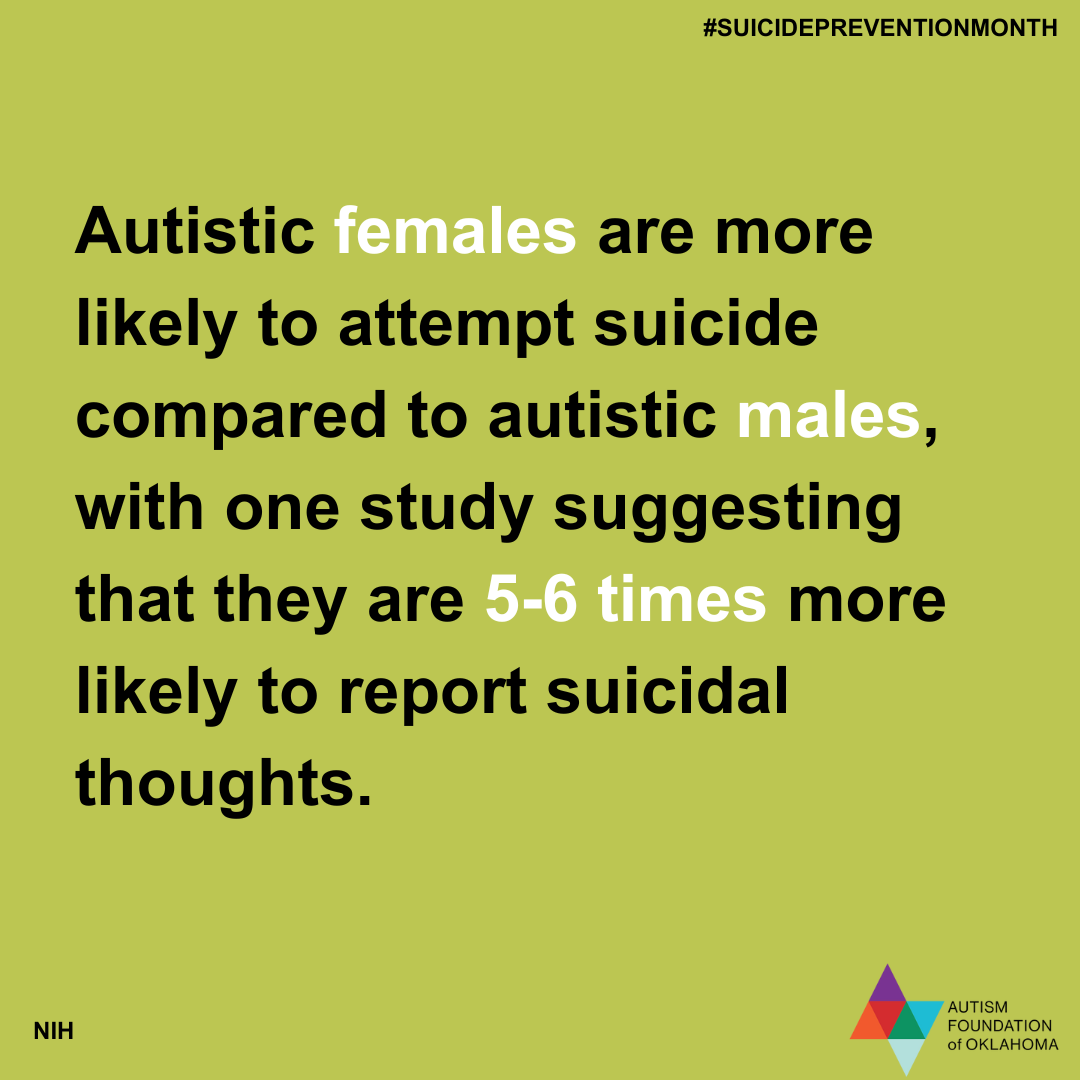
Females with ASD are more than 3X as likely to die from suicide as their neurotypical peers.
Autistic people are 6X more likely to attempt suicide than the general population.
Twice-exceptional youth—children who have a diagnosis of autism and who also have exceptional cognitive ability—are at increased risk of suicidal thoughts.
The highest rate of suicide attempts and death by suicide among autistic people are those who do not have an intellectual disability.
About 1 in 10 autistic individuals who also have ADHD have attempted suicide.
Autistic children with an IQ of 120 or higher are 6x more likely to have thoughts of suicide.
Young people with ASD are at twice the risk of suicide than young people without ASD.
Individuals with ASD were less likely than others to die from firearm‐related suicides.
Up to 66% of autistic people have considered suicide.
Autistic children are bullied 3-4 times as often as their neurotypical peers.
Co-occurring mental health conditions can increase an autistic person’s suicide risk.
41% to 50% of autistic kids have 2 or more mental health conditions.
References: ncbi.nlm.nih.gov, medicine.uiowa.edu, Sparkforautism.org, spectrumnews.org, Researchautism.org
Warning Signs
Sudden or increased withdrawal
No words to communicate acute distress
Current traumatic event reported by self or others
Increase in rate and severity of self-harm
Worsening levels of symptoms of anxiety and depression
A new focus on suicidal talk
Perseverative suicidal thoughts and ruminations
Seeking means or making plans for suicide or suicidal rehearsal
Statements about no reason to live or no purpose in life
Hopelessness
Giving away belongings or making preparations for death
Remember : A behavior that is common for an autistic person may still be a warning sign when it is new, significantly increased, or different from their usual baseline.
Reference: 988lifeline.org
Offering Support- What Can You Do?
Ask directly. Listen without judgment. Take concerns seriously. Use clear, concrete language and give the person time and space to communicate. You do not have to have all the answers—you just need to help connect the person with support.
Believe them
Listen to them
Ask clear and specific questions
Give time for the person to respond
Provide support that is tailored to meet the person's unique needs
Connect them with social support
Promote feelings of belonging and self-worth
Reference: Autism.org/uk
Make a Safety Plan
An autism-informed safety plan may include:
Trusted people to contact
Preferred communication methods
Calming and sensory strategies
Safe places and environments
Warning signs that indicate a crisis is developing
Professional and crisis resources
Steps to make the environment safer
Resources
LOCAL
988 Oklahoma – Mental Health Lifeline
Mental Health Association of Oklahoma – Local Mental Health Support
Oklahoma State Department of Education: Suicide Prevention Resources – Oklahoma Suicide Prevention
Gateway to Prevention Resources – Local Suicide Prevention Resources
NATIONAL
988 Lifeline – Suicide and Crisis Lifeline
Substance Abuse and Mental Health Services Administration – Support and Treatment Services
Mental Health Association – Treatment and Services
American Psychiatric Association – Support and Resources for Patients and Families
American Psychology Association – Help for Emotional Crisis
National Alliance of Mental Illness – Mental Health Resources
National Institute of Mental Health – Mental Health Resources Including Federal Agencies
American Psychology Association – Both Local and National Resources
The Podcast
Social Media Awareness